
Compare line and warehouse controls Test qualifications, shift changes, department access, attendance, time, incidents, and replacement records.
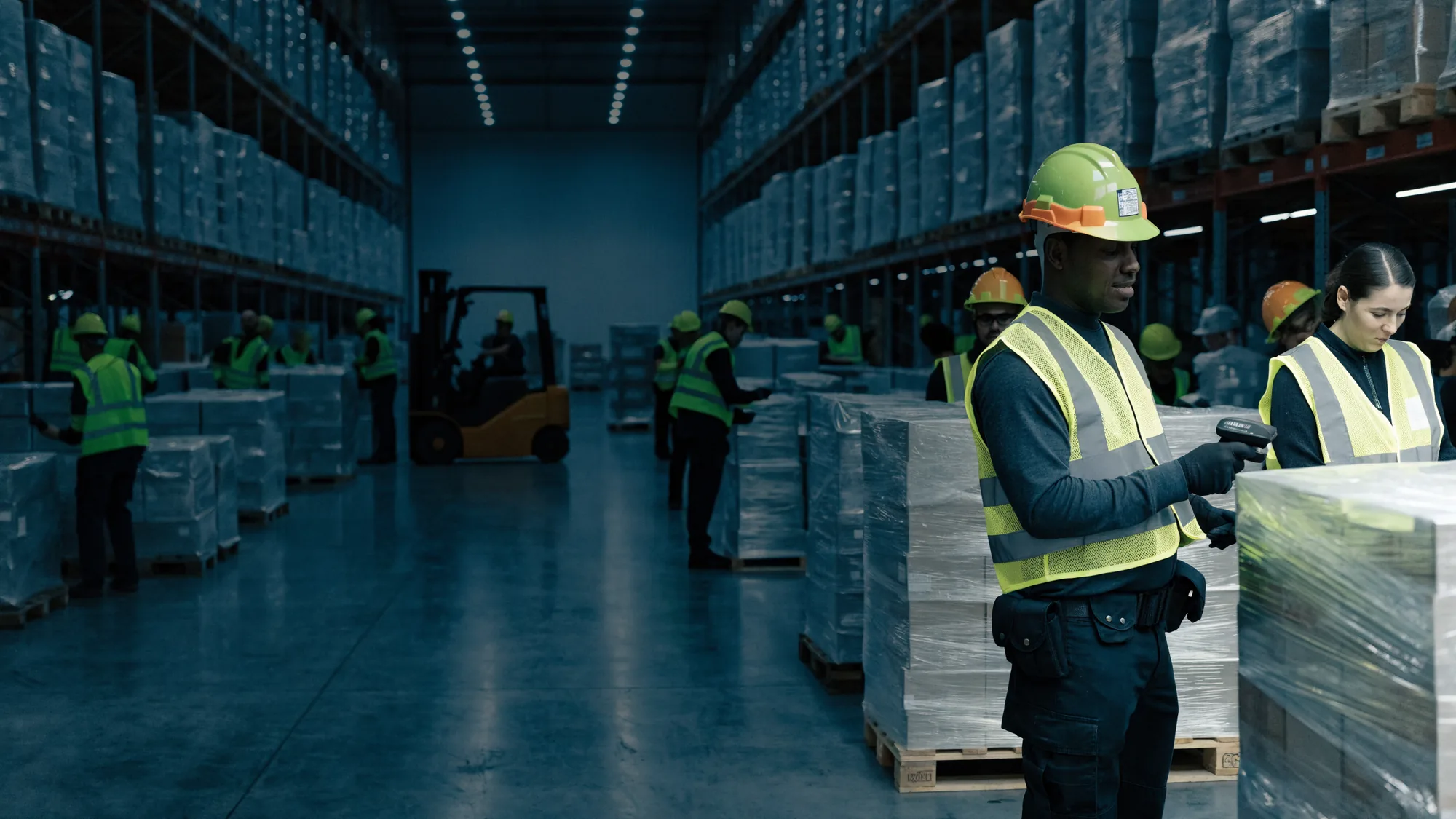
TempGuru staffing softwareIndustry buyer guide
Light Industrial Staffing Software
Light industrial staffing software built for the warehouse floor.
TempGuru can help warehouse and distribution staffing agencies connect client orders, work areas, worker evidence, shift responses, attendance, time review, and billing preparation. Feature availability depends on the plan and configured process.
Quick answer
Light industrial staffing software should describe the warehouse assignment at floor level: inbound or outbound, ambient or cold, equipment type, lifting and pace, PPE, site training, start wave, supervisor, attendance exception, and approved time. A warehouse job title without that context is barely an order.Answer for agency software buyers
01Warehouse order
What makes warehouse staffing software different from a generic ATS?
The candidate pipeline ends before the most expensive part of a warehouse order begins.
A light industrial system has to run repeat shifts, large start waves, attendance, client-specific prerequisites, and fast reassignment. It should represent the facility, zone, department, shift, break pattern, supervisor, tasks, equipment exposure, productivity instruction supplied by the host, and actual-time approval. Candidate history supports those decisions, but it does not replace them.
Test how the desk moves from an open request to worker interest, acceptance, dispatch, arrival, exception handling, and closeout. TempGuru may support messaging and mobile time capture under the selected configuration. The agency still approves assignments, checks its requirements, and resolves exceptions with the host.
Shortlist test
Open fifty positions across two start waves and three warehouse zones. The system should show the gaps without merging distinct jobs into one progress bar.
02Work area
How should a warehouse order describe the work area, not just the job title?
“Picker” changes meaning between a freezer aisle, mezzanine, conveyor lane, and bulky-goods floor.
Record inbound, outbound, replenishment, returns, inventory, sanitation, kitting, or packing as the process. Add the physical zone, temperature, expected lift or carry range provided by the client, repetition, standing or walking pattern, conveyor interaction, scanner type, noise, PPE split, and any restricted task. Link the host’s current job description and its effective date.
Use worker-facing language that allows an informed response. “Warehouse associate” hides cold exposure and a midnight start. The assignment brief should state those facts before acceptance. If the client changes the zone or task after arrival, open a revised assignment step and review training, pay, and worker response instead of editing history.
Specificity rule
If two zones have different equipment, temperature, pace, or supervisor, they deserve separate assignment records even when the client uses one title.
03Forklift evidence
What proof belongs with a forklift assignment?
A card in a profile is not a blanket authorization for every truck and warehouse.
OSHA’s powered industrial truck training guide says training should reflect the vehicle type, operator experience, and workplace hazards, and includes formal instruction plus practical training. OSHA also places responsibility for the training program and operator authorization on the employer.
Software should store the truck class or make and model covered, training and evaluation dates, evaluator or provider, workplace component, host authorization status, restrictions, and re-evaluation trigger. The agency must verify what its client requires and who will perform the site-specific evaluation. A checkbox called “forklift certified” loses the facts a dispatcher needs.
Credential design
Match the evidence to the equipment and workplace. Show expired, incomplete, or host-pending items before a worker can be dispatched to operate.
04Attendance waves
How can agencies manage start-time waves and no-call exceptions?
Fifty workers rarely arrive as one neat line. The system should not force the desk to treat them that way.
Set separate arrival windows for orientation, badge processing, and productive start. Show confirmations and arrivals by wave, zone, and supervisor. A late shuttle, closed entrance, or backed-up security desk should open a shared site exception rather than fifty individual no-show records. The dispatcher can then decide whom to contact and what the client needs to know.
Replacement outreach should remain a person-led decision. Capture the reason, target zone, new report time, worker acceptance, and host approval if the shift has already begun. Availability is not a promise of coverage. Software helps the desk see and document the response; it cannot manufacture a qualified worker who accepts the assignment.
Control view
Group site-caused exceptions without erasing individual status. One locked gate can affect many workers and still require person-level follow-up.
05Hazard intake
Which warehouse hazards should appear in the client intake?
The intake should make the host describe the actual floor before the agency sends people into it.
OSHA’s warehousing overview identifies powered industrial trucks, ergonomics, material handling, chemicals, slips and falls, and robotics among potential hazards. Use those categories as questions, then add the site’s answers, controls, training roles, emergency process, and responsible contacts.
The software can require an intake response and carry the resulting brief. It cannot inspect racks, evaluate a chemical program, or decide that the host’s controls are adequate. The staffing agency should follow its safety process, ask about conditions it does not understand, and preserve what was verified before assignment.
Host facts
A hazard checklist is a prompt. The useful record names the exposure, work area, control, training owner, and date reviewed for this facility.
06Clock review
How should clock data become billable time without hiding exceptions?
Warehouse entrances, indoor signals, and supervisor moves make perfect punches a bad design assumption.
Keep scheduled start, gate arrival, productive start if separately tracked under applicable rules, breaks, department transfer, release, and any manual correction. A geofence can support time capture when configured, but the agency needs a route for weak signal, a relocated entrance, a forgotten punch, or a host-directed early release. Preserve the original event and the correction reason.
Send supervisor approval at the right level. A floor lead may confirm attendance while a client manager approves overtime or department transfers. Payroll decides compensable time under the applicable rules; client approval supports billing but does not replace that review. Limit who can alter each field and retain an exportable history.
Exception first
Design the time flow around the cases that require judgment. Straight punches will take care of themselves.
07Peak test
What should buyers test on the warehouse’s busiest shift?
Do not test ten workers at noon if the client starts eighty people before dawn.
Use the largest start wave, multiple zones, forklift and non-equipment roles, one group gate delay, an absent supervisor, a task change, and corrected time. Watch mobile response speed, permission boundaries, and how the desk finds unresolved items. Export the shift for payroll and billing review while the exceptions are still open.
Compare current options on the TempGuru plan page. Agencies that cross from distribution into plant work should also examine the manufacturing staffing software guide. Confirm equipment records, integrations, messaging, and support for the chosen plan before setting a cutover date.
Decision point
The winning demo is the one where the desk can identify the next five decisions during a messy start wave without opening five exports.
SourcesOfficial references
Official sources and verification
OSHA identifies warehouse hazard categories including industrial trucks, material handling, chemicals, slips and falls, ergonomics, and robotics. Use them to test client intake and briefing fields.
The guide ties operator training to vehicle type, prior skill, and workplace conditions. Use that detail to replace broad forklift tags with reviewable evidence and authorization status.
FAQBuyer questions
Buyer questions for light industrial staffing software
What is light industrial staffing software?
Light industrial staffing software is agency software for warehouse and distribution orders, worker evidence, shift waves, assignment decisions, attendance, site exceptions, time approval, payroll inputs, and client billing support. It should preserve the work area and equipment context behind each warehouse title.
Can warehouse staffing software confirm forklift qualification for any site?
No. OSHA training is tied to the truck and workplace, and the employer is responsible for the training program and operator authorization. Software can store evidence, dates, restrictions, and host status so agency staff can make a documented assignment decision.
How should a system handle a security-gate delay affecting many workers?
Create a site-level exception linked to each affected assignment. Preserve individual arrival and contact facts, pause automatic no-show treatment, record the host communication, and let agency staff decide replacement and pay or billing follow-up.
Does geofencing eliminate warehouse timecard review?
No. Indoor signal, multiple entrances, badge queues, department transfers, breaks, and host-directed releases still create exceptions. Keep source punches, correction history, reasons, and supervisor approval visible to payroll reviewers.
What should a light industrial agency migrate before peak season?
Move active warehouse clients, facility and zone records, current workers, equipment evidence, upcoming orders, shift templates, pay and bill settings, open time exceptions, and supervisor permissions. Load-test the largest start wave before importing low-value history.
Light-industrial staffing workflow · For staffing agencies
What should light-industrial staffing software preserve across a warehouse assignment?
Preserve the facility, department, role, shift, qualification, safety instruction, assignment, attendance, schedule change, supervisor, time approval, pay and bill records, incident route, and replacement history. Test an absence and a worker moved between departments. The agency still owns employment, qualification, safety, payroll, and client-specific operating decisions.
Compare the client, worker, order, time, payroll, and billing records your agency needs to manage. TempGuru software is available to partner and non-partner staffing agencies in the United States and Canada.
Continue the agency workflow review
Compare controlled-site qualifications Keep jobsite, credential, orientation, access, schedule, supervisor, time, and change evidence together.
Return to the general assignment model Connect client, worker, location, schedule, duties, rates, approvals, corrections, and exports.
Bring one real workflow, its exceptions, and the evidence your team needs to retain.